What Happens During a Cystoscopy? A Patient’s Guide to Bladder Examination
Understand what to expect during a cystoscopy procedure, from preparation to recovery. Learn about b



The male anatomy, with a longer urethra and antibacterial prostatic fluid, typically prevents urinary tract infections, making recurrent UTIs a signal that something is wrong. Recurrent UTI in men is defined as two or more infections within six months or three or more within twelve months, and unlike isolated episodes, recurring infections indicate structural, functional, or immunological abnormalities allowing bacteria to persist.
Identifying these underlying factors is essential to achieving long-term resolution rather than merely suppressing symptoms, and to preventing serious complications such as kidney damage, sepsis, and chronic prostatitis.
Structural abnormalities within the urinary tract create environments where bacteria can persist despite antibiotic treatment. These factors may be present from birth or develop over time, and many go unnoticed until recurrent infections prompt investigation.
Benign prostatic hyperplasia (non-cancerous enlargement of the prostate gland) is a common structural cause of recurrent UTI in older men, as the enlarged prostate compresses the urethra and prevents the bladder from emptying fully. Residual urine left behind can create conditions that may allow bacteria to persist between voids, though the direct causal link between post-void residual and recurrent UTI is not fully established in the clinical literature.
Narrowing of the urethra from previous infection, medical instrumentation, or trauma disrupts normal urinary flow and leads to incomplete emptying and sometimes urinary retention. Strictures from infection (including gonorrhoea) and iatrogenic causes (such as catheterisation or transurethral procedures) most commonly affect the bulbar urethra — the most frequent site of stricture disease overall — while traumatic strictures from pelvic fractures tend to involve the deeper membranous urethra. The location and length of the stricture determine both the symptoms experienced and the appropriate treatment approach.
Stones anywhere in the urinary system provide surfaces where bacteria can form biofilms (protective layers that make them harder to eliminate with antibiotics). Struvite stones, which form specifically in infected urine, harbour bacteria within their structure and cannot be cleared with antibiotics alone; the stone must be removed or broken apart. Even stones that originally formed in sterile urine can become colonised once infection occurs, providing a reservoir of bacteria that may persist on the stone surface and contribute to recurrent infections even after antibiotic treatment clears the urine.
Not all causes of recurrent infection involve visible structural changes. Functional disorders affecting bladder contraction, sphincter coordination (the muscle control that holds and releases urine), or neurological control create infection-prone conditions with normal-appearing anatomy on imaging.
Conditions affecting bladder innervation (nerve supply) impair both the sensation of bladder fullness and the coordinated contraction needed for complete emptying. These conditions include:
Diabetic cystopathy (bladder dysfunction caused by diabetes) develops insidiously and can present with a wide range of symptoms — from overactive bladder to decreased bladder sensation and overflow incontinence. Many patients are unaware that their post-void residuals have increased substantially, as the bladder decompensates gradually over years of poorly controlled disease.
Detrusor-sphincter dyssynergia (a condition where the bladder muscle contracts but the sphincter doesn’t relax properly during urination) occurs most commonly as a result of suprasacral spinal cord injury or demyelinating conditions such as multiple sclerosis. It creates high-pressure voiding that damages the bladder wall while leaving significant residual urine. This condition requires urodynamic testing for diagnosis, as symptoms alone cannot distinguish it from other causes of incomplete emptying.
Primary bladder neck obstruction affects younger men with normal-appearing prostates, where the bladder neck fails to open adequately during voiding—causing the same consequences as prostatic enlargement, including residual urine and recurrent infection. Diagnosis requires video-urodynamics (tests combining imaging with bladder pressure measurements), and the condition responds well to alpha-blocker medication or bladder neck incision, yet remains undiagnosed in many men repeatedly treated for UTI.
The prostate gland poses unique challenges for treating infection. Chronic bacterial prostatitis (CBP, long-lasting bacterial infection of the prostate) causes recurrent UTI in men through intermittent seeding of bladder urine from an infected prostatic focus. In chronic bacterial prostatitis, where prostatic inflammation has resolved but infection persists, the blood-prostate barrier (a protective layer that limits what passes from blood into prostate tissue) significantly restricts antibiotic penetration, allowing bacteria to persist in prostatic tissue and ducts despite appropriate antibiotic levels in the bloodstream.
Prostatic infection should be suspected when urine cultures repeatedly grow the same organism, particularly Enterobacteriaceae (a family of bacteria commonly found in the intestines). Symptoms may include:
Many men with CBP report only recurrent cystitis symptoms (bladder infection symptoms such as burning and frequent urination).
The four-glass test (Meares-Stamey localisation) or the simplified two-glass test helps identify whether infection is localised to the prostate by comparing bacterial counts in pre- and post-prostatic massage urine specimens. Significantly higher colony counts in post-massage specimens suggest prostatic bacterial colonisation, though the test is not widely performed in daily practice and is less sensitive when prostatic secretions are not obtained.
Treating chronic bacterial prostatitis requires a targeted, often prolonged approach to fully clear infection from prostatic tissue.
Evaluation moves from non-invasive to invasive studies, with initial findings guiding the need for further testing.
Urine culture with sensitivity testing confirms the infection and identifies the causative organism, while repeat cultures between episodes help distinguish relapse (same organism returning, suggesting a persistent focus such as a stone or prostatic infection) from reinfection (a different organism, indicating ongoing exposure or susceptibility). Post-void residual measurement by ultrasound non-invasively quantifies the amount of urine remaining in the bladder after urination, identifying incomplete emptying as a contributing factor.
Renal and bladder ultrasound is the first-line imaging study, identifying stones, kidney swelling from urine backup, bladder wall thickening, and elevated post-void residual. A CT urogram (a detailed X-ray scan using contrast dye) is used when ultrasound findings are inconclusive or upper tract problems are suspected, while MRI is reserved for cases in which a prostatic abscess or other soft-tissue abnormality needs closer evaluation.
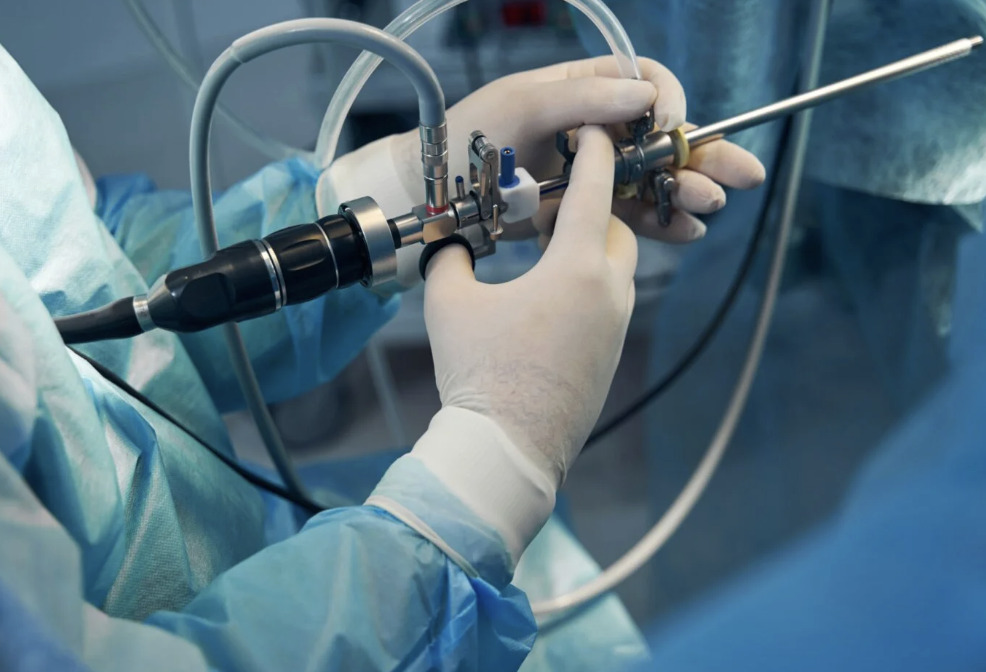
Cystourethroscopy (a camera procedure through the urethra) allows direct visualisation of the urethra and bladder, identifying strictures, stones, diverticula, and other abnormalities not visible on imaging. Findings often directly guide treatment—strictures may be stretched or cut open, bladder stones fragmented and removed, and significant prostatic obstruction assessed for surgical intervention.
When neurogenic bladder dysfunction or bladder neck obstruction is suspected, urodynamic studies measure bladder pressure, flow rates, and sphincter function during filling and voiding. These tests identify conditions such as weak bladder contractions, detrusor-sphincter dyssynergia (where the sphincter contracts rather than relaxes during urination), and impaired bladder compliance—all of which predispose to infection but remain invisible on standard imaging.
Indwelling urethral catheters (tubes that remain in the bladder to continuously drain urine) inevitably cause bacteriuria (bacteria in the urine). Biofilm develops on catheter surfaces within days. Virtually all long-term catheterised patients have positive urine cultures. Managing this situation differs fundamentally from treating community-acquired UTI.
Asymptomatic bacteriuria (bacteria in urine without symptoms) in catheterised patients should not be treated with antibiotics. Treatment selects only for resistant organisms, without clinical benefit. Symptomatic catheter-associated UTI — fever, flank pain, or systemic symptoms — requires catheter replacement or removal before antimicrobial therapy is initiated, as antibiotics cannot sterilise an established biofilm on the catheter surface.
Prevention strategies focus on:
Identifying structural or functional abnormalities allows targeted intervention. This may eliminate recurrent infection rather than merely treating each episode.
Transurethral resection of the prostate (TURP, a procedure where excess prostate tissue is removed through the urethra using an electrical loop) or newer laser techniques relieve prostatic obstruction. They improve bladder emptying and reduce the risk of infection. Men with moderate-to-severe obstruction and recurrent UTI often experience a reduction in infection frequency following surgical relief.
Urethral stricture treatment ranges from simple dilatation (gentle stretching of the narrowed area) for short, thin strictures to urethroplasty (surgical reconstruction of the urethra) for complex or recurrent strictures. Definitive reconstruction offers better long-term patency (staying open) than repeated dilatation.
Stone treatment options include:
Alpha-blockers (tamsulosin, alfuzosin—medications that relax muscles in the prostate and bladder neck) relax prostatic smooth muscle. They may improve voiding enough to reduce residual urine in men with mild-to-moderate prostatic obstruction. These medications work within days. They may defer or avoid surgical intervention.
5-alpha reductase inhibitors (finasteride, dutasteride—medications that shrink the prostate by blocking hormones that cause growth) shrink prostatic tissue over months. Maximum effect occurs over an extended period. These may be considered for men with significantly enlarged prostates. They may complement alpha-blockers.
Clean intermittent self-catheterisation (a technique where the patient inserts a catheter to empty the bladder several times daily, then removes it) provides complete bladder emptying for men with atonic bladders (bladders with weak or absent muscle contractions) or irreversible obstruction not suitable for surgery. While daunting at first, most men master the technique within days. Infection rates are substantially lower than with indwelling catheters.
When anatomical correction is impossible or infection recurs despite treatment of identified factors, low-dose antibiotic prophylaxis (continuous low-dose antibiotics taken to prevent infection) may reduce infection frequency. Common regimens include trimethoprim, nitrofurantoin, or cefalexin taken as a nightly low dose.
Post-coital dosing is an option studied primarily in women and is not well established in men, where recurrent infection more commonly reflects structural or prostatic causes requiring targeted management.
Prophylaxis suppresses rather than cures, and resistance to prophylactic agents — including nitrofurantoin and trimethoprim — is a well-documented and expected consequence of long-term use. Periodic urine culture surveillance is essential, with readiness to modify or discontinue prophylaxis if resistance emerges.
Why are recurrent UTIs in men taken more seriously than in women?
The male urinary tract provides natural barriers to infection that make UTIs relatively uncommon. When infections recur despite these protections, an underlying abnormality is present in many cases. Women’s shorter urethra and proximity to vaginal and rectal flora (bacteria normally present in those areas) make UTIs common without structural abnormality.
Can prostate problems cause UTIs even if I don’t have trouble urinating?
Prostatic enlargement develops gradually. The bladder compensates by working harder. Many men with significant residual urine report satisfactory urination because they’ve adapted to their baseline. Measuring post-void residual objectively identifies retention that symptoms alone might miss.
How long should antibiotics be taken for prostate-related UTI?
Confirmed chronic bacterial prostatitis requires an extended period of antibiotic therapy with agents that penetrate prostatic tissue. Standard shorter courses may temporarily clear bladder urine while leaving prostatic infection untreated. This may result in relapse within weeks.
Are there alternatives to long-term antibiotics for prevention?
D-mannose supplements have not been shown to significantly reduce recurrent UTI in robust placebo-controlled trials and are not currently recommended by major guidelines. Cranberry products have limited and mixed evidence. Methenamine hippurate (an antiseptic that works in acidic urine) has shown more promise as an antibiotic-sparing option, though evidence is primarily in women and evidence in men with structural causes remains limited. These may be discussed with a urologist as adjuncts rather than replacements for targeted treatment.
What happens if the cause of recurrent UTIs isn’t found?
Comprehensive investigation identifies a cause in most cases. When evaluation is unrevealing, prophylactic antibiotics may be offered while monitoring for emerging symptoms or signs that warrant repeat investigation. Some men have subtle functional abnormalities below current detection thresholds.
Recurrent urinary infection signals an underlying abnormality requiring systematic investigation. Identifying structural, functional, or prostatic causes enables treatment that addresses the root problem rather than repeatedly suppressing symptoms. Comprehensive urological evaluation—including post-void residual measurement, imaging, and cystoscopy—establishes why infections recur and guides definitive management.
If you’re experiencing recurrent urinary tract infections, difficulty urinating, or incomplete bladder emptying, consult Dr Azhari for a comprehensive evaluation and targeted treatment based on the underlying cause.

Former Director of Endourology (Urinary stone service) Singapore General Hospital 2016 to 2023
With more than 20 years experience as a certified Urologist, Dr Nor Azhari specializes in treating a wide range of kidney, bladder and prostate conditions as well as disorders of the male reproductive organs. He offers minimally invasive treatment options and provides same-day appointments for convenience.
For urgent or same day appointment requests, please call our hotline.
Understand what to expect during a cystoscopy procedure, from preparation to recovery. Learn about b
 Optimized by Seraphinite Accelerator