Fraud Blocker ...

Same Day Appointments Available

Understanding Inguinal Hernia: Comprehensive Guide to Diagnosis and Treatment

Living with a bulge or discomfort in your groin can affect your daily activities. If you’ve noticed swelling that appears when standing or straining, you may have an inguinal hernia. This common condition has effective treatments available.

An inguinal hernia occurs when tissue (usually part of the intestine) pushes through a weak spot in the abdominal muscles near the groin. A qualified healthcare professional can provide an accurate diagnosis and discuss treatment options suited to your situation.

Dr. Nor Azhari Bin Mohd Zam

MBBS (NUS)|MRCS (Edin.)|MMed Surgery (NUS)|FAMS (Urology)

Inguinal Hernia (2) Understanding Inguinal Hernia: Comprehensive Guide to Diagnosis and Treatment

What is an Inguinal Hernia?

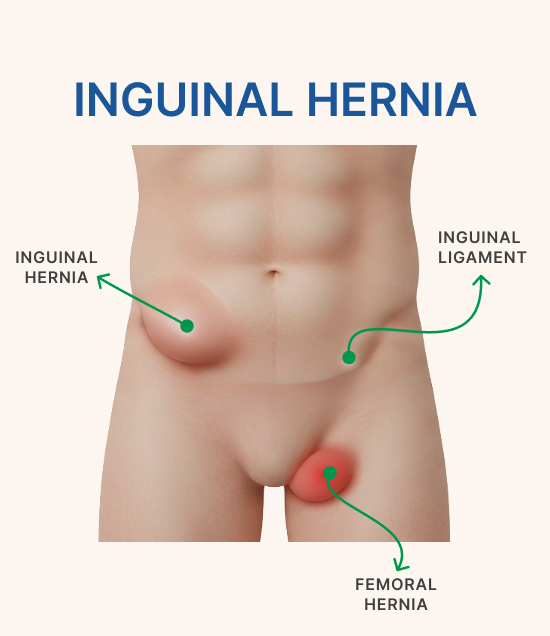
An inguinal hernia develops when abdominal contents protrude through the inguinal canal (a passage in the lower abdominal wall that runs through the groin area). This canal normally contains blood vessels and, in men, the spermatic cord that connects to the testicles.

The condition occurs when weakness or an opening in the abdominal wall muscles allows fatty tissue or a portion of the bowel to push through, creating a noticeable bulge. The bulge typically becomes more prominent when you stand up, cough, or strain during physical activities.

Inguinal hernias are the most common type of hernia. Men are more likely to develop an inguinal hernia than women due to anatomical differences in the groin region.

Types of Inguinal Hernia

Indirect Inguinal Hernia

An indirect inguinal hernia (the most common type) occurs when abdominal contents pass through the internal inguinal ring. This type follows the path of the inguinal canal and may extend into the scrotum in men. Indirect hernias are often congenital, meaning the weakness was present from birth, as the inguinal canal failed to close properly during development.

This type can develop at any age. The hernia sac travels along the same route that the testicles descended before birth, which explains why it can sometimes reach the scrotum.

Direct Inguinal Hernia

A direct inguinal hernia pushes directly through a weakened area in the posterior wall of the inguinal canal. This type typically develops over time due to strain and weakening of the abdominal muscles. Direct hernias are more common in adults, particularly middle-aged and older men.

Unlike indirect hernias, direct hernias rarely extend into the scrotum. They usually appear as a bulge in the groin that becomes more noticeable with activities that increase abdominal pressure.

Incarcerated and Strangulated Hernias

When hernia contents become trapped and cannot be pushed back into the abdomen, the hernia is incarcerated. If blood supply to the trapped tissue is cut off, it becomes strangulated. A strangulated hernia is a medical emergency requiring immediate surgical intervention to prevent tissue death and serious complications.

Causes & Risk Factors

Common Causes

The primary cause of an inguinal hernia is a weakness in the abdominal wall muscles combined with increased pressure within the abdomen. Contributing factors include:

  • Congenital weakness present from birth
  • Previous abdominal surgery that weakened muscle tissue
  • Chronic conditions causing persistent coughing
  • Connective tissue disorders affecting muscle strength
  • Injury or trauma to the groin area

Risk Factors

Certain factors increase your likelihood of developing an inguinal hernia:

  • Male gender: Men have a higher risk due to the natural weakness where the spermatic cord passes through the abdominal wall
  • Age: Muscles naturally weaken with age
  • Family history: Having relatives with hernias raises your risk
  • Chronic constipation: Straining during bowel movements increases abdominal pressure
  • Chronic cough: Persistent coughing from smoking or lung conditions strains the abdominal wall
  • Heavy lifting: Occupations or activities involving repetitive heavy lifting
  • Obesity: Excess weight places additional pressure on abdominal muscles
  • Pregnancy: Multiple pregnancies can weaken abdominal muscles
  • Premature birth: Infants born prematurely may have a higher hernia risk

Signs & Symptoms

Mild Symptoms

In the early stages, an inguinal hernia may present with subtle signs:

  • A small bulge on either side of the pubic bone
  • Slight discomfort or aching sensation in the groin
  • Feeling of heaviness or dragging in the groin area
  • Mild burning sensation at the bulge site

These symptoms often worsen throughout the day, particularly after prolonged standing or physical activity. Many people notice the bulge disappears or reduces when lying down.

Moderate Symptoms

As the hernia progresses, symptoms typically become more pronounced:

  • A larger, more noticeable bulge that extends further
  • Increased discomfort (especially when bending, coughing, or lifting)
  • Swelling around the testicles if the intestine descends into the scrotum
  • Sharp sensation during physical exertion
  • Difficulty with certain movements or activities

The discomfort may begin to interfere with daily activities and work responsibilities. Some patients report a gurgling sensation as intestinal contents move within the hernia sac.

Severe Symptoms

Severe symptoms indicate potential complications and require immediate medical attention:

  • Sudden, intense groin discomfort
  • A bulge that becomes firm, tender, and cannot be pushed back
  • Nausea and vomiting
  • Fever
  • Redness or discolouration of the bulge
  • Inability to pass gas or have bowel movements

These symptoms may indicate an incarcerated or strangulated hernia, which constitutes a surgical emergency.

Experiencing these symptoms?

Consult Dr Azhari for an accurate diagnosis and personalised treatment plan.

When to See a Urologist

Seek medical evaluation if you notice a bulge in your groin area, even if it causes no discomfort. Early assessment allows for planned treatment before complications develop. See a urologist if the bulge grows larger over time or becomes increasingly uncomfortable.

The appropriate time for consultation is when symptoms first appear. Early intervention often allows for more treatment options and typically results in a smoother recovery. Delaying treatment increases the risk of the hernia enlarging and potentially becoming complicated.

During your first consultation, the urologist will take a detailed medical history and perform a physical examination. You may be asked to stand and cough while the urologist feels the groin area. This helps identify the hernia and assess its size and characteristics. Your urologist may order additional imaging tests (such as ultrasound or CT scans) if the diagnosis is unclear.

Seek emergency care immediately if you experience:

  • Sudden severe discomfort in the groin or scrotum
  • A bulge that turns red, purple, or dark
  • Inability to push the hernia back in when lying down
  • Signs of bowel obstruction (such as vomiting and inability to pass gas)

Diagnosis and Testing Methods

Physical Examination

A thorough physical examination is fundamental to inguinal hernia diagnosis. Your doctor will examine the groin area while you’re standing and lying down. You’ll be asked to cough or bear down, which increases abdominal pressure and makes the hernia more apparent. The doctor will assess the hernia’s size, reducibility, and whether it extends into the scrotum.

Ultrasound Imaging

Ultrasound is often the first imaging test used when physical examination findings are inconclusive. This non-invasive test uses sound waves to create images of the groin structures. It helps detect hernias and differentiate them from other conditions (like lymph nodes or fluid collections). Ultrasound is particularly useful for identifying occult hernias (hernias that aren’t obvious on examination).

Your urologist can typically provide results immediately. The test requires no special preparation and takes a relatively short time.

CT Scan

A CT scan provides detailed cross-sectional images of the abdomen and groin. This imaging test is particularly helpful for complex cases, recurrent hernias, or when other pathologies need to be excluded. CT scans can show the hernia contents and identify any complications.

MRI

MRI offers detailed soft tissue visualisation without radiation exposure. It’s particularly useful for athletes with groin discomfort to differentiate between hernias and muscle or tendon injuries. Your doctor may recommend an MRI when other tests are inconclusive or when detailed anatomical information is needed for surgical planning.

Treatment Options Overview

Watchful Waiting

For some patients with small, minimally symptomatic hernias, careful observation may be appropriate. This approach involves monitoring the hernia for any changes while managing symptoms conservatively. Regular follow-up appointments ensure any progression is detected early.

Watchful waiting is generally only suitable for patients who have minimal symptoms and understand the risks of delayed treatment. Your urologist will determine if this approach is appropriate based on your specific risk factors (including your age, overall health, existing medical conditions, and the hernia’s characteristics).

Supportive Measures

While awaiting surgery or if surgery is not immediately possible, certain supportive measures can help manage symptoms. Wearing a hernia truss (a supportive garment) may provide temporary relief by holding the hernia in place. Avoiding heavy lifting and activities that increase abdominal pressure can help prevent symptom aggravation.

These measures are not curative and should be viewed as temporary options. Prolonged use of trusses is generally not recommended, as they can lead to skin irritation and do not prevent hernia enlargement or complications.

Open Hernia Repair Surgery

Open hernia repair is an established treatment approach. The surgeon makes a cut in the groin to access the hernia, pushes the protruding tissue back into the abdomen, and reinforces the weakened abdominal wall.

Modern open repair typically involves placing a synthetic mesh to strengthen the repair. Surgeons usually perform the procedure under local, regional, or general anaesthesia depending on patient factors and surgeon preference.

Laparoscopic Hernia Repair

Laparoscopic surgery uses small incisions and a camera to perform the repair from inside the abdomen. The surgeon inserts specialised instruments through small ports (small openings) to place mesh over the hernia defect. This minimally invasive approach may offer certain advantages for appropriate candidates.

Laparoscopic repair typically involves less post-operative discomfort and faster return to normal activities. Many patients resume work within a short time. This approach can be beneficial for bilateral hernias and recurrent hernias after previous open repair.

Robotic-Assisted Hernia Repair

Robotic surgery represents a contemporary approach to minimally invasive hernia repair. The surgeon controls robotic arms that provide enhanced precision and three-dimensional visualisation. This technology allows for careful tissue handling and mesh placement through small incisions.

Robotic-assisted repair may be considered in complex cases requiring precise tissue handling. The improved visualisation can be particularly helpful for recurrent hernias or patients with challenging anatomy.

Everyone experiences symptoms differently.

Dr Azhari can assess your specific situation and recommend a treatment approach tailored to your needs.

Complications if Left Untreated

Untreated inguinal hernias typically worsen over time, evolving from a minor bulge into a serious medical risk.

  • Progressive Enlargement: Hernias generally grow larger and more uncomfortable over time; a small, manageable bulge can eventually become a complex protrusion that is much harder to repair surgically.
  • Incarceration: This occurs when the hernia contents become “trapped” outside the abdominal wall and cannot be pushed back in, often leading to firm tenderness, bowel obstructions, nausea, and vomiting.
  • Strangulation: A life-threatening emergency where the blood supply to the trapped tissue is cut off; if not treated immediately, this can lead to tissue death (gangrene), sepsis, and severe infection.
  • Impact on Male Health: In chronic cases, the constant pressure of a large hernia on the spermatic cord can impair blood flow to the testicle, potentially affecting long-term function and fertility.

Prevention

While not all inguinal hernias can be prevented, certain lifestyle modifications may help reduce your risk:

  • Maintain a healthy weight to decrease strain on the abdominal wall muscles
  • Eat a high-fibre diet to prevent constipation and the straining that accompanies it
  • Use proper lifting technique: bend at the knees, keep the back straight, and lift with your leg muscles rather than your back
  • Avoid sudden jerking movements when lifting
  • Quit smoking to reduce chronic coughing that strains the abdominal wall
  • Manage chronic conditions that cause persistent coughing
  • Strengthen core muscles through appropriate exercise

For those who have undergone hernia repair, following post-operative instructions carefully helps prevent recurrence. This includes avoiding heavy lifting during the recovery period and gradually returning to normal activities as directed.

Frequently Asked Questions

How do I know if my groin bulge is an inguinal hernia?

An inguinal hernia typically presents as a bulge in the groin that becomes more prominent when standing, coughing, or straining. The bulge often reduces or disappears when lying down. You may feel a dull ache, heaviness, or burning sensation at the site. Definitely distinguishing a hernia from other causes of groin swelling requires examination by a qualified medical professional who can perform a physical examination and order imaging if needed.

Can an inguinal hernia heal without surgery?

No, an inguinal hernia cannot heal on its own. The weakness in the abdominal wall that allows the hernia to form will not heal on its own. Without surgical treatment, hernias typically enlarge over time and may develop complications. While some patients with minimal symptoms may be monitored initially, surgery remains the only definitive treatment.

How long is the recovery after inguinal hernia surgery?

After laparoscopic repair, most patients return to desk work within a short time and resume normal activities within several weeks. Open repair may require a slightly longer recovery, typically several weeks before returning to full activities. Heavy lifting is generally restricted for several weeks after either procedure. Your doctor can provide personalised recommendations.

Is inguinal hernia surgery safe?

Inguinal hernia repair is a commonly performed surgery with an established safety profile. As with any surgical procedure, there are potential risks (including infection, bleeding, and anaesthesia-related complications). Specific risks include chronic discomfort, hernia recurrence, and injury to surrounding structures. Your doctor will discuss these risks in detail during your consultation.

What type of anaesthesia is used for hernia surgery?

The choice of anaesthesia depends on the surgical approach, patient health factors, and preferences. Surgeons can perform open hernia repair under local anaesthesia (numbing medication in the specific area) with sedation, regional anaesthesia (spinal or epidural, which numbs the lower body), or general anaesthesia (medication that puts you to sleep). Laparoscopic and robotic repairs typically require general anaesthesia. Your doctor and anaesthetist can recommend an appropriate option.

How should I prepare for my hernia surgery consultation?

Bring the following to your consultation:

  • A list of your current medications (including supplements and over-the-counter drugs)
  • Notes on any previous surgeries (especially in the abdominal or groin area)
  • A description of your symptoms (including when they started and what makes them better or worse)
  • Any questions you have about the procedure, recovery, and expected outcomes
  • Recent imaging results, if available

Can I continue exercising with an inguinal hernia?

Light to moderate exercise is generally safe with a small, reducible hernia. Avoid activities that cause discomfort or make the bulge larger. Avoid heavy weightlifting and exercises that significantly increase abdominal pressure, as they can worsen the hernia. Swimming, walking, and gentle cycling are usually well-tolerated. Discuss your specific exercise routine with your doctor for personalised guidance.

Please note: Individual experiences with inguinal hernias and their treatment vary based on personal health factors, the specific characteristics of the hernia, and individual response to treatment. The information provided here is for general educational purposes and should not replace personalised medical advice. Always consult with qualified healthcare professionals who can evaluate your specific situation and provide tailored recommendations.

Conclusion

An inguinal hernia is a common condition that affects quality of life and carries the risk of serious complications if left untreated. Understanding the causes, recognising the symptoms, and knowing when to seek medical attention empowers you to make informed decisions about your health.

Modern surgical techniques offer treatment options with established outcomes. Whether through open, laparoscopic, or robotic approaches, experienced surgeons can address the hernia and restore abdominal wall integrity. Early treatment typically allows for planned surgery with a smoother recovery.

If you’re experiencing symptoms suggestive of an inguinal hernia, seeking professional evaluation is an important step. Accurate diagnosis and timely treatment can help prevent complications and support your return to normal activities. Speak with your urologist about an appropriate evaluation if you notice a groin bulge or experience related symptoms.

Take the First Step

Don’t let the discomfort of an inguinal hernia hold you back. Consult Dr Azhari for diagnosis and evidence-based treatment tailored to your recovery.

Dr. Nor Azhari Bin Mohd Zam

Dr. Nor Azhari Bin Mohd Zam

MBBS (NUS)|MRCS (Edin.)|MMed Surgery (NUS)|FAMS (Urology)

Former Director of Endourology (Urinary stone service) Singapore General Hospital 2016 to 2023

With more than 20 years experience as a certified Urologist, Dr Nor Azhari specializes in treating a wide range of kidney, bladder and prostate conditions as well as disorders of the male reproductive organs. He offers minimally invasive treatment options and provides same-day appointments for convenience.

  • Skilled urologist and kidney stone surgeon
  • Recognized with the College of Surgeons Gold Medal and Singapore Urological Association Book prize
  • Minimally invasive treatment options available (non-invasive and endoscopic/key-hole techniques)

Make an Enquiry

For urgent or same day appointment requests, please call our hotline.

    Full Name*

    Email Address*

    Phone Number*

    Your Message*

    For Faster Response, call us!

    +65‎ 6334‎ 1486

    Our Clinic Locations

    Asian Healthcare Specialists (Novena)

    Mount Elizabeth Novena Specialist Centre
    38 Irrawaddy Road
    #08-41 Singapore 329563

    Asian Healthcare Specialists (Alvernia)

    Mount Alvernia Hospital
    820 Thomson Road Medical Centre Block A #05-03 Singapore 574623

    Seraphinite AcceleratorOptimized by Seraphinite Accelerator
    Turns on site high speed to be attractive for people and search engines.