Fraud Blocker

Same Day Appointments Available

Understanding Urinary Disturbance Related to the Prostate in Singapore

Difficulty passing urine, increased frequency (urgency), or urinary incontinence are common clinical presentations among men in Singapore. These symptoms may be attributed to changes in the prostate gland.

A formal urological evaluation is the standard clinical approach to identify the underlying cause and determine an appropriate management plan for urinary function. Prostatic urinary disturbance can significantly impact a person’s quality of life, potentially leading to disrupted sleep (nocturia) and affecting daily social or professional activities.

doctor img
Dr. Nor Azhari Bin Mohd Zam

MBBS (NUS)|MRCS (Edin.)|MMed Surgery (NUS)|FAMS (Urology)

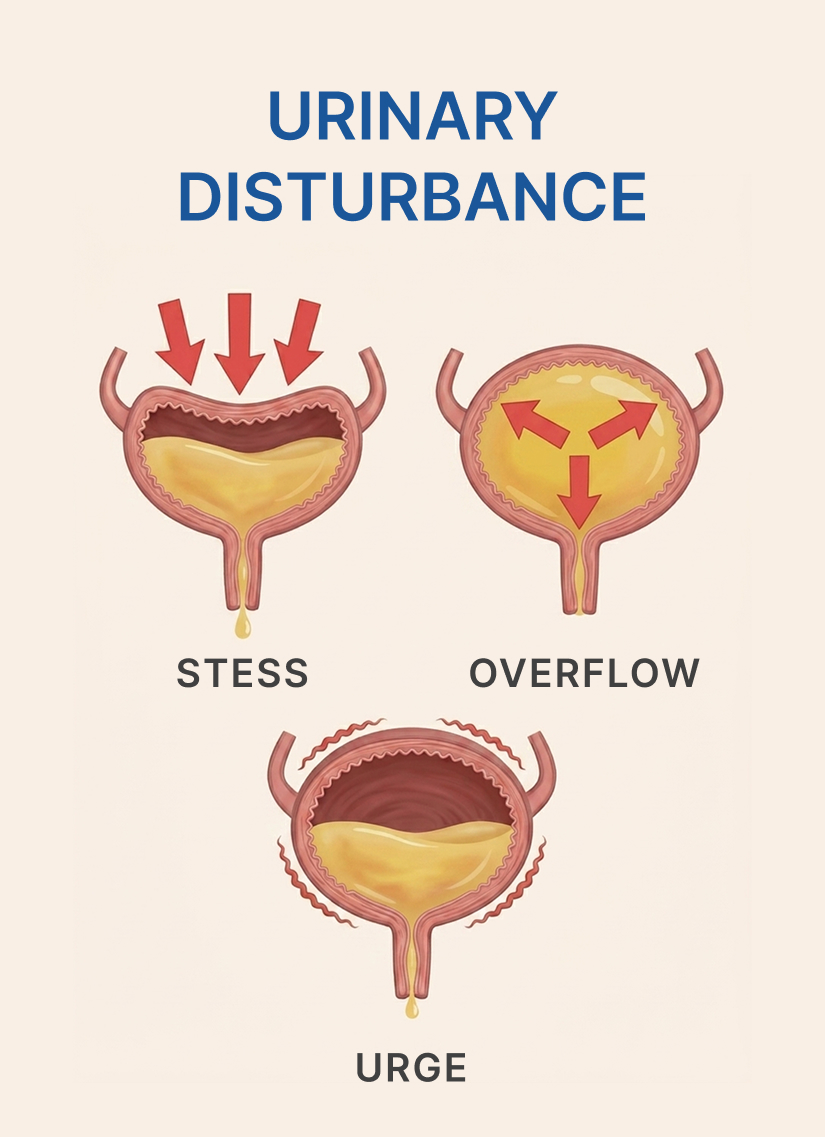
Illustration depicting three types of urinary disturbances: stress, overflow, and urge. Understanding Urinary Disturbance Related to the Prostate in Singapore

How Is Urinary Disturbance Related to the Prostate Identified?

Many conditions can cause similar urinary symptoms. Overactive bladder syndrome, urinary tract infections, bladder pathology, and certain neurological conditions can all lead to frequent urination, urgency, or a weak stream. A thorough urological assessment pinpoints whether the prostate gland is the true source.

From Your Words to Clinical Findings

When you describe your experience using phrases like “my stream is weak,” “I feel like I can’t empty my bladder,” or “I rush to the toilet constantly,” your urologist translates these observations into a structured clinical evaluation. This begins with a detailed medical history and a physical examination, which typically includes a digital rectal examination to assess the size, surface texture, and consistency of the prostate gland.

Validated Scoring and Objective Testing

Your urologist will likely ask you to complete a validated symptom scoring questionnaire. This standardised tool assigns a numerical value to the severity and frequency of your symptoms, providing an objective baseline that can be tracked over time.

Several objective tests also help build a complete clinical picture:

  • A urinary flow study (uroflowmetry) measures the rate and pattern of your urine stream.
  • A post-void residual measurement uses ultrasound to determine how much urine remains in your bladder after urinating.
  • Elevated residual volumes may suggest incomplete bladder emptying, which can result from prostatic obstruction or reduced bladder muscle function — both of which your urologist will assess.

Blood Markers and Imaging

Blood tests, including prostate-specific antigen (PSA) levels, help your urologist evaluate prostate health — PSA can be elevated in benign enlargement, inflammation, or malignancy, and also serves as a useful indicator of overall prostate volume and disease progression risk. Imaging studies, such as an ultrasound of the kidneys, bladder, and prostate, provide visual detail about the gland’s size, structure, and impact on surrounding organs.

Together, these findings produce a formal clinical diagnosis that ties your urinary disturbance specifically to the prostate, allowing your urologist to recommend a targeted management plan.

What Causes Urinary Disturbance from the Prostate to Develop?

Understanding why your symptoms developed helps you make sense of the clinical decisions ahead. The prostate gland sits just below the bladder and surrounds the urethra, making it uniquely positioned to affect urinary flow when it changes in size or function.

  • The Role of Ageing and Hormones

    For most men, the process begins with the natural biology of ageing. The enzyme 5-alpha reductase converts testosterone into dihydrotestosterone (DHT) within the prostate, and sustained DHT activity — along with changes in androgen receptor sensitivity — drives gradual growth of prostatic tissue over time. This process requires both hormonal activity and the ageing process, and symptoms may go unnoticed for many years before becoming apparent.”

  • How Enlargement Leads to Obstruction

    As the prostate grows, it can progressively narrow the urethra, the tube that carries urine from your bladder out of the body. Think of it like a garden hose being gently squeezed: the water still flows, but with less force and efficiency. This is why you may notice a weaker stream, the need to strain or push to start urinating, or the sensation that your bladder never fully empties.

  • Changes in Muscle Tone

    The prostate and bladder neck contain smooth muscle fibres. Changes in the tone of these muscles can tighten the outflow channel further, contributing to both difficulty emptying the bladder (voiding symptoms) and difficulty storing urine comfortably (storage symptoms). This dual mechanism explains why some men experience a mix of a weak stream and urgency or frequency.

  • Secondary Bladder Changes

    When the bladder works harder over a prolonged period to push urine past an obstructed prostate, the bladder muscle itself can undergo structural changes. Initially, the muscle may thicken and become overactive, leading to sudden urges and frequent toilet trips. Over time, chronic obstruction can cause progressive changes to the muscle’s structure and nerve supply, reducing its ability to contract effectively and resulting in poor emptying and increased residual urine.

  • Other Prostatic Conditions to Consider

    Benign prostatic enlargement is a common cause of prostate-related urinary disturbance, but it is not the only one.Prostatic inflammation (prostatitis) can cause similar irritative symptoms. Prostate malignancy must be formally excluded through proper clinical evaluation. This is a key reason a specialist assessment is important, rather than assuming all urinary symptoms are simply a normal part of getting older.

Different Types and Stages of Prostate-Related Urinary Disturbance

Not all urinary symptoms are the same. Your urologist distinguishes between different categories because the type and severity directly influence which treatment approach is most appropriate for you.

Storage Symptoms

Storage symptoms relate to how your bladder holds urine. You may recognise these as:

  • Urinary frequency: needing to go far more often than usual during the day.
  • Urgency: a sudden, intense need to urinate that feels difficult to delay.
  • Nocturia: waking during the night to urinate, which can disrupt sleep quality and next-day energy. Waking two or more times regularly is considered clinically significant.

In your own words, this might sound like, “I barely make it to the bathroom in time” or “I’m up several times every night.”

Voiding Symptoms

Voiding symptoms describe what happens when you are actually trying to pass urine:

  • A weak or slow stream
  • Hesitancy, where you have to wait before the flow begins
  • Straining to maintain the flow
  • Intermittency, where the stream stops and starts
  • Terminal dribble: a prolonged, slow trickle at the very end of urination, before flow has fully stopped.”

You might describe this as, “I have to push to start”, or “It takes me a long time to finish.”

Post-Micturition Symptoms

These symptoms occur after you have finished urinating:

  • Post-micturition dribble: an involuntary loss of small amounts of urine immediately after finishing urination, usually after leaving the toilet.
  • A persistent sensation of incomplete emptying.

Many men find these symptoms particularly bothersome as they can affect daily activities and confidence.

Determining Clinical Stage

Your urologist establishes the clinical stage of your condition through validated assessment tools, such as the International Prostate Symptom Score, combined with objective measurements like flow rates and post-void residual volumes. Symptoms are generally classified as mild, moderate, or severe. This classification directly determines whether conservative measures, medication, or procedural intervention is the most appropriate pathway for your situation.

When to Seek Specialist Advice for Urinary Disturbance

Many men try to manage urinary symptoms on their own for months or even years. You may have already adjusted your fluid intake, timed your bathroom visits, or tried over-the-counter supplements. While these strategies may offer some temporary relief, there is a clinical threshold beyond which self-management is no longer appropriate or safe.

Seek urological assessment without delay if you experience any of the following:

  • Visible blood in the urine, even if it occurs only once — this warrants prompt urological assessment regardless of the suspected cause.”
  • Recurrent urinary tract infections, which may signal incomplete bladder emptying
  • Urinary retention, whether acute (a sudden, complete inability to pass urine, which is a medical emergency) or chronic (a gradual inability to fully empty the bladder that may present without pain but can still cause progressive harm)
  • Worsening nocturia that disrupts your sleep night after night
  • Any form of incontinence that impairs your daily activities, work, or social life

The Risks of Delay

Avoiding medical consultation may feel easier in the short term, but it carries real risks. Progressive obstruction can silently damage your bladder or kidneys, and delaying assessment can also postpone the identification of more serious underlying conditions, including prostate malignancy. Early specialist assessment provides clarity and opens the door to timely intervention before complications develop.

Experiencing blood in urine, retention, or worsening nocturia?

A urological assessment can help identify the underlying cause of these symptoms. Early clinical evaluation is a standard approach to monitoring bladder and kidney health.

Your Treatment Path for Prostate-Related Urinary Disturbance

The appropriate approach to managing prostate-related urinary disturbance depends on your specific clinical picture. Your urologist considers how much your symptoms affect daily life, the degree of physical obstruction, how well your bladder is functioning, and the characteristics of your prostate gland. Treatment is tailored to the individual.

Management of Mild Prostate-Related Urinary Disturbance

When symptoms are present but do not significantly interfere with your daily routine or pose a risk of complications, a conservative approach is often the most appropriate starting point.

Structured behavioural strategies form the foundation:

  • Timed voiding: training your bladder to follow a regular schedule.
  • Fluid management: reducing intake before bedtime to minimise nocturia.

Your urologist may also recommend active surveillance, involving regular monitoring through symptom scoring and objective measurements to ensure the condition remains stable.

If symptoms warrant pharmacological support, first-line medical therapies may be introduced. These typically include medications that relax the smooth muscle within the prostate and bladder neck to support urinary flow, or medications that may gradually reduce prostate gland volume over time. All pharmacological options carry potential side effects, which should be discussed openly with your specialist so you can make an informed decision.

Management of Moderate Prostate-Related Urinary Disturbance

When symptoms begin to affect your quality of life despite initial conservative or single-medication strategies, or when objective findings suggest the obstruction is progressing, the clinical approach may need to be escalated. Your urologist monitors elevated post-void residual volumes and reduced urinary flow rates closely during follow-up.

For men with confirmed prostatic enlargement, combination pharmacotherapy may be considered, using two medications with complementary mechanisms to address both gland size and muscle tone contributing to obstruction.

For some men, minimally invasive procedural interventions become a more appropriate option than medication alone. A senior consultant urologist evaluates prostate size, patient anatomy, comorbidity profile, and personal clinical goals before making any procedural recommendation. This patient-centred assessment ensures recommendations are individualised rather than formulaic.

Management of Severe Prostate-Related Urinary Disturbance

When the condition has progressed to significant obstruction, recurrent urinary retention, recurrent infections, bladder decompensation, or compromise to kidney function, the clinical situation becomes more urgent. At this stage, surgical intervention may be the most appropriate pathway to relieve obstruction and support long-term urinary and renal health.

Surgical approaches fall into several broad categories: procedures that remove or resect obstructing tissue, procedures that use energy to ablate or vaporise tissue, and minimally invasive techniques that mechanically remodel the prostate without removing tissue. The most appropriate approach depends on prostate size and anatomy, the patient’s overall health, and the treating surgeon’s expertise.

The choice of technique depends on prostate size and shape, the presence of other medical conditions, and the patient’s overall fitness. All surgical approaches carry inherent risks, including bleeding, infection, and effects on urinary or sexual function. These must be discussed thoroughly with your specialist before proceeding.

Seeking to understand which treatment pathway may suit your condition?

A structured urological review identifies an appropriate management route based on symptom severity, prostate characteristics, and individual health considerations.

Clinical Goals and Safety of Treating Prostate-Related Urinary Disturbance

Treating prostate-related urinary disturbance extends well beyond making it easier to pass urine. The broader clinical goals are designed to support your health at multiple levels and address the impact that urinary symptoms may have on quality of life.

Preserving Bladder and Upper Tract Health

One of the most important objectives is to preserve your bladder’s contractile function. Prolonged obstruction can cause the bladder muscle to thicken, become overactive, and eventually weaken. Appropriate intervention aims to relieve the obstruction before irreversible bladder changes occur.

Equally important is protecting your upper urinary tract. Severe or chronic obstruction can cause urine to back up toward the kidneys, potentially causing damage that affects kidney function over time.

Reducing Infection Risk and Supporting Daily Activities

Incomplete bladder emptying creates a reservoir of stagnant urine, an environment conducive to bacterial growth. Effective management of the underlying obstruction may help reduce the risk of recurrent urinary tract infections.

On a personal level, successful treatment aims to support uninterrupted sleep by reducing nocturia and may help restore confidence in social and professional settings by addressing concerns about urgency or leakage.

Realistic Expectations and Safety Parameters

It is important to approach treatment with realistic expectations. Responses to both medication and procedures differ. While many achieve meaningful improvement, others may require ongoing management. Safety and success rest on four pillars:

  • Thorough pre-treatment assessment: Identifying the specific cause of symptoms (e.g., obstruction vs overactivity).
  • Appropriate patient selection: Matching the intervention to your specific prostate anatomy and health profile.
  • Shared Decision-Making: Aligning the treatment’s risk-benefit profile with your personal lifestyle goals.
  • Specialist oversight: Continuous monitoring to adjust therapy as the condition naturally progresses.

Can Prostate-Related Urinary Disturbance Be Prevented?

While the biological growth of the prostate is a natural part of ageing, certain strategies can help delay the onset of symptoms and reduce the risk of complications.

Proactive Surveillance and Early Management

From your 40s or 50s, a baseline prostate health assessment is recommended. This allows your urologist to track the rate of change in your prostate volume and flow rate. In some cases, early medical intervention can significantly reduce the long-term risk of needing surgery or experiencing sudden urinary blockage.

Evidence-Based Lifestyle Adjustments

  • Regular physical exercise: Higher levels of activity are associated with a lower risk of severe symptoms, likely by reducing systemic inflammation.
  • Dietary Triggers: Limiting bladder irritants like caffeine and alcohol can significantly manage urgency and frequency.
  • Fluid Timing: Moderating fluid intake 2–3 hours before sleep is a primary clinical recommendation for reducing nocturia.
  • Weight Management: Maintaining a healthy BMI helps manage pelvic floor pressure and metabolic factors linked to prostate enlargement.

Non-Modifiable Factors: It is important to acknowledge that genetics and age-related hormonal shifts are the primary drivers of growth. Because these factors cannot be changed, consistent monitoring remains the most effective tool for maintaining long-term urinary health.

Frequently Asked Questions About Prostate-Related Urinary Disturbance

Is it normal to wake up multiple times at night to urinate?

Waking once during the night may be within the normal range, particularly as you age. Waking two or more times regularly is classified as nocturia and warrants clinical evaluation, as it may indicate an underlying prostatic or bladder condition that benefits from treatment.

Does an enlarged prostate mean I have cancer?

No. Benign prostatic enlargement is a common cause of prostate-related urinary symptoms and is not cancerous. Because prostate cancer can coexist with benign enlargement, screening and evaluation by a urologist are important to exclude malignancy.

Will medication alone address my urinary problems?

Medication can be effective for many men, particularly those with mild to moderate symptoms. Responses vary, and some men may eventually require procedural intervention if symptoms progress or medication proves insufficiently effective.

Can urinary disturbance from the prostate come back after treatment?

Yes. Prostate tissue can continue to grow over time, and symptoms may gradually return. Regular follow-up with your urologist helps detect any recurrence early so adjustments can be made.

Is surgery always necessary for prostate-related urinary issues?

No. Surgery is generally reserved for moderate to severe cases that do not respond adequately to conservative or pharmacological management, or when complications such as retention or kidney compromise are present.

How do I know if my symptoms are getting worse?

Key signs of progression include increasing frequency, a worsening stream, new or worsening nocturia, episodes of being unable to urinate, and visible blood in the urine. If you notice any of these changes, schedule a specialist review.

Are there risks to leaving prostate-related urinary symptoms untreated?

Yes. Untreated obstruction can lead to recurrent infections, bladder muscle damage, bladder stones, and, in severe cases, kidney damage. Early evaluation helps prevent these complications.

Will treating the prostate affect sexual function?

This is a common and important concern. Some older medications and traditional surgeries (like TURP) can affect ejaculation or erectile function. However, newer Minimally Invasive Surgical Therapies (MISTs) are specifically designed to relieve obstruction while preserving sexual function. Your urologist will help you choose a treatment that aligns with your priorities for quality of life.

At what age should I start getting my prostate checked?

Most clinical guidelines recommend that men with average risk begin discussing prostate health at age 50. However, if you have a family history of prostate disease or are of African descent, doctors recommend starting these discussions as early as age 40–45. An early baseline assessment (including a PSA test and physical exam) provides a vital “reference point” for your urologist to track changes over the following decades.

How long does it take to see improvement after starting treatment?

This depends on the type of treatment. Medications that relax prostate muscle may provide relief within a period of days to weeks, while medications that reduce prostate size may take several months to show their full effect. Procedural interventions may produce more noticeable improvements within weeks, though the full result may take time to stabilise. Your urologist will set appropriate expectations based on your specific treatment plan.

Long-Term Urinary Health and Sustained Outcomes

Clinical success is not defined by a single treatment event. It is the sustained stabilisation of your prostate and lower urinary tract function over time, the restoration of comfortable and controlled voiding, and the support of your confidence and quality of life.

Achieving this requires an ongoing, collaborative relationship between you and your urologist. Regular follow-up appointments, periodic objective testing, and open communication about any changes in your symptoms ensure that your care remains responsive and proactive. With consistent professional medical oversight, supporting long-term urinary health is attainable.

Concerned about persistent or worsening urinary symptoms?

Dr Azhari’s assessment provides diagnostic clarity and access to an individualised management plan suited to your clinical profile.

Dr. Nor Azhari Bin Mohd Zam

Dr. Nor Azhari Bin Mohd Zam

MBBS (NUS)|MRCS (Edin.)|MMed Surgery (NUS)|FAMS (Urology)

With more than 15 years experience as a certified Urologist, Dr Nor Azhari specializes in treating a wide range of kidney, bladder and prostate conditions as well as disorders of the male reproductive organs.

He offers minimally invasive treatment options and provides same-day appointments for convenience.

  • Skilled urologist and kidney stone surgeon.
  • Director of Endourology (Urinary stone service) at Singapore General Hospital – 2016 to 2023.
  • Recognized with the College of Surgeons Gold Medal and Singapore Urological Association Book prize.
  • Minimally invasive treatment options available (non-invasive and endoscopic/key-hole techniques).

Make an Enquiry

For urgent or same day appointment requests, please call our hotline.

    Full Name*

    Email Address*

    Phone Number*

    Your Message*

    For Faster Response, call us!

    +65‎ 6334‎ 1486

    Our Clinic Locations

    Asian Healthcare Specialists (Novena)

    Mount Elizabeth Novena Specialist Centre
    38 Irrawaddy Road
    #08-41 Singapore 329563

    Asian Healthcare Specialists (Alvernia)

    Mount Alvernia Hospital
    820 Thomson Road Medical Centre Block A #05-03 Singapore 574623